What is kick-off is a common question among people who are just starting to learn football terminology. Simply put, a kick-off is the act of putting the ball into play to start a match or restart play after a goal. When watching tường thuật trực tiếp bóng đá on 90Phut TV, fans will frequently encounter this term before each half begins.
What Is Kick-Off in Football?
Under the Laws of the Game, what is kick-off can be understood as a kick taken from the center spot to start or restart a match. It is one of the most basic restarts in football, occurring at the beginning of the first half, the beginning of the second half, at the start of extra-time periods, and after a team scores a goal.

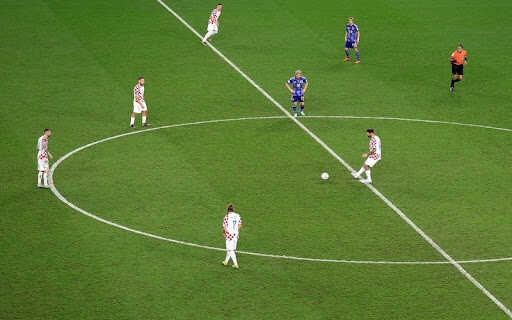
Kick-off is a restart taken from the center of the pitch
Before the kick-off is taken, players from both teams must be in their own half, except for the player taking the kick. The team not taking the kick-off must maintain the required distance from the ball until the referee allows play to begin.
The referee usually checks the positions of the players and goalkeepers and ensures that both teams are ready before blowing the whistle. Immediately after the signal, the player takes the kick and the ball officially enters play. On 90p TV, the kick-off is often also the moment when the first tactical developments of the match begin.
When Is a Kick-Off Taken?
A kick-off does not occur only once at the beginning of a match. It can be taken several times depending on what happens on the pitch. Understanding each occasion helps viewers recognize exactly how a football match is organized.
Kick-Off at the Start of the Match
Before the match, the referee usually conducts a coin toss with the captains of both teams to determine the choice of ends or the right to take the kick-off according to the applicable procedures. Once the players are in their correct positions, the referee signals for the match to begin.
This is the easiest situation to recognize when learning what kick-off is. The player taking the kick-off usually stands near the center spot, while teammates position themselves according to the tactical plan prepared by the coaching staff. Some teams immediately pass the ball backward to control possession, while others may choose to move the ball forward quickly.
Kick-Off at the Start of the Second Half
When the first half ends, the teams change ends, and the right to take the second-half kick-off is determined according to the match procedures. Changing ends helps ensure fairness in relation to factors such as wind direction, lighting, or pitch conditions.
Viewers following tường thuật trực tiếp bóng đá through 90 Phút TV may notice that many teams significantly change their approach after halftime. Therefore, the second-half kick-off is not merely a formality but can also mark the moment when a team begins implementing a new tactical approach.
Kick-Off After a Goal
After every valid goal, play is restarted with a kick-off from the center of the pitch. The kick-off is taken by the team that conceded the goal. Players must return to the appropriate positions before the referee allows play to resume.
This situation is particularly noteworthy in high-tempo matches. The team that has just conceded may restart very quickly in an attempt to find an equalizer, while the leading team will often reorganize immediately to protect its advantage.
Kick-Off in Extra Time
In knockout matches that require a winner, the two teams may have to play extra time. In this case, kick-offs are also used to start each period of extra time, just as they are during normal playing time.
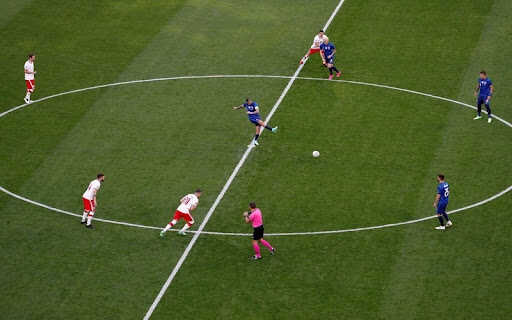
The kick-off occurs at the start of each half and after every valid goal
Those who follow the Champions League and check tỷ lệ kèo bóng đá hôm nay on 90m TV often pay particular attention to this stage, as even a small change in tactics or physical condition can make a major difference.
What Are the Rules for a Kick-Off?
When looking more deeply into what kick-off is, viewers should also understand some basic principles governing the restart. These regulations help matches begin under fair conditions and prevent teams from gaining an improper advantage.
The ball must be placed correctly on the center spot before the kick-off. Players from the opposing team must remain at the required distance from the ball until it is in play. The remaining players must also comply with the positional requirements before the referee gives the signal.
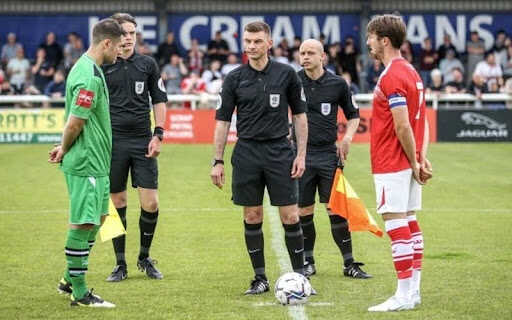
The referee gives the official signal for the kick-off to begin
After the referee blows the whistle, the player may play the ball in a direction appropriate to the team’s intended approach. Modern football rules give teams greater flexibility in organizing kick-offs rather than requiring the ball to be played in one specific direction.
If the player taking the kick-off violates the rules, the referee may order a retake or apply the appropriate sanction depending on the situation. Through matches updated on 90P TV, viewers can see that although a kick-off seems simple, referees still closely monitor player positions and the moment the ball is put into play.
Does Kick-Off Affect Tactical Approach?
In modern football, kick-offs are increasingly planned carefully by coaches. Instead of simply passing the ball to start the match, many teams prepare specific patterns designed to create an advantage from the very first seconds.
A possession-oriented team may take the kick-off and immediately pass the ball to a center-back, encouraging the opponent to push forward before building from the back. In contrast, a direct-playing team may use a long pass immediately after the kick-off to move the ball quickly into the opposition half.
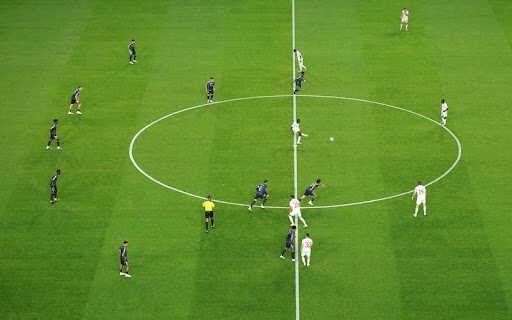
Modern football teams can prepare attacking patterns from the kick-off
Some teams also use kick-offs to create rehearsed attacking moves. Forwards begin moving as soon as the ball starts rolling, midfielders play quick passes, and the entire team pushes forward together. This approach can catch opponents by surprise before they have had time to establish their defensive structure.
Therefore, understanding what kick-off is not only helps viewers understand the rules but also helps them read how each team approaches the opening moments of a match. Particularly in the Champions League, combining observations of team formations with tỷ lệ kèo bóng đá hôm nay can provide additional insight into the balance of strength and how the two teams approach the match.
Common Misunderstandings About Kick-Off
A common misconception is that kick-off only occurs when a match begins. In reality, a kick-off also takes place at the start of the second half, at the beginning of extra-time periods, and after every valid goal.
A kick-off is also different from a free kick. A free kick is awarded after a foul or other infringement, while a kick-off is a method of starting or restarting play at specific moments defined by the Laws of the Game.
In addition, a kick-off is different from a dropped ball. A dropped ball is used in certain situations where play has to be stopped for a reason that does not involve an offense requiring a free kick. Therefore, new football viewers should clearly distinguish between these situations to better understand the referee’s decisions.
According to the rules-related content explained by 90 Phut, understanding basic terms such as kick-off, free kick, throw-in, corner kick, and dropped ball helps viewers follow matches more easily and understand the reasons behind the referee’s decisions.
Conclusion
From the information above, viewers can clearly understand what kick-off is, when it is taken, and its role in football rules and tactics. It is not merely a procedure for putting the ball into play but can sometimes be the starting point for a carefully prepared attacking move. 90Phut will continue to provide useful knowledge to help football fans gain a deeper understanding of the beautiful game.